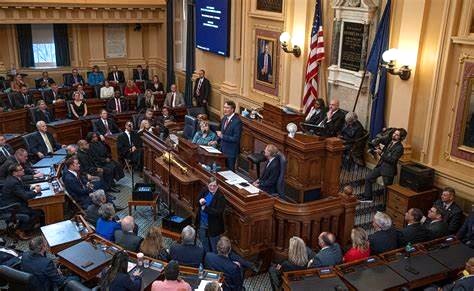
Today’s news is full of accounts describing how conservative legislators and agency officials at the state and federal level oppose or want to water down climate change education for students. They often say that teaching students about the consequences of and solutions to a changing climate is dangerous to the American way of life. Placed under a microscope, however, these concerns reflect a tired narrative, put forward, years ago, by oil, gas and coal companies. Back then, these companies said that the very existence of climate change was fictitious or in doubt and was designed to slow economic growth. Sadly, the message stuck and became an emblem for many conservatives.
But these fossil fuel companies have since moved on from their old fable. Indeed, the fossil fuel industry now embraces the realities of climate change and is working on turning them into business opportunities. Look, for example, at what Exxon is saying now. But their old stories persist in legislatures and with some public agency officials across the U.S. There is no need for this persistence. A new and more hopeful narrative has emerged that is wholly consistent with conservative values and is already reflected in climate change education programming across the U.S. Let’s take a look.
Climate education supports American business growth. Like it or not, the U.S. is deeply tied to (many would say driving) a global economy. Fifty years ago, the U.S. was a leader in developing electronics and forty years ago we were pioneers in computer and software technology. Today we are developing bioengineering and artificial intelligence. But a new global race has also shaped up. It is all about energy and sustainability. The heads of major American companies totally understand this new economic challenge and are rising to it. They need workers and managers who share that understanding. The business opportunities are deep and rich and include new modes of manufacturing, transportation, energy production and distribution, agriculture and forestry, health care, water management and so much more. Simply put, climate education ranging from student foundational leaning, through technical training, to business and government leadership will help the U.S. continue to be a powerful global economic leader.
Climate education supports technological advancement and good-paying jobs. Businesses, large and small, know that a shifting economy will require new technologies. This will require trained and skilled new technicians. Already companies cannot find enough skilled workers in the alternative energy fields, which are more labor-intensive than fossil fuels and are increasing their market share year by year. Installers, monitors, repair specialists and others will be required for solar, wind and geothermal, energy, electric vehicles, sustainable industrial engineering and other positions. These are jobs that pay good salaries and benefits and support the development of a stronger U.S. workforce. Infusing sustainability skills into U.S. Career and Technical Education will create countless job opportunities for American workers.
Climate education supports inventiveness and American ingenuity. Technology and business experts agree that tackling the climate challenge will require many thousands of new inventions. They can be small, such as lights that work from sea water or drones that can plant trees, or very large and transformative, such as fusion power. While existing technology and infrastructure may be sufficient to meet emissions goals, it is widely agreed that such new inventions and breakthroughs will create deeper and more lasting improvements. We need more support for climate education programs designed to inspire energy inventiveness and innovation.
Climate education supports a strong U.S. military and national security: The Central Intelligence Agency and the Department of Defense profoundly agree that shifting patterns in weather and climate will be a major factor in future conflicts and wars. Many of these will place American military members and families at risk. The Defense Department, in its 2021 climate risk assessment, says ” Climate change touches most of what this Department does, and this threat will continue to have worsening implications for U.S. national security.” “The Department will work to prevent, mitigate, and respond to the defense and security risks associated with climate change. By doing so, we will ensure that we continue to fulfill our mission of defending the United States.”
Our youth need to be equipped for a more volatile and uncertain future. Any good parent knows he or she wants their child to be prepared for a rough and tumble world. While we might want to protect them along the way, we know that one day, they will need to face the world and stand on their own feet. That world is changing faster than ever before and a new layer of preparation will be required. Extreme weather, more powerful storms, more destructive flooding, larger, hotter wildfires, more intense heat waves, more persistent droughts and other shifts in weather and climate patterns are real. These factors are making climate education more central to readying children and young adults for understanding new economic realities, staying out of harms way and thriving in a more weather and climate-driven world. Denying young people their right to truly understand these opportunities and risks is profoundly unfair.
Climate education teaches children traditional values. We want our children to learn to think of others, to be thrifty and to be contributing members of their communities. Schools are ideal settings for children to learn these basic values. Climate education teaches about saving electricity, saving water, avoiding food waste, cleaning up, planting trees and gardens, doing volunteer services and more. The reality is that one fourth of America’s $8 billion school energy bill is due to waste, millions of pounds of food get thrown away each month, less than 10% of solid waste gets recycled and students are a big part of that wasteful behavior. Shifting weather and climate patterns present an opportunity to refocus students on basic, old-fashioned values.
Climate education is being sought by a generation of voters: Every four years another 18 million young people are able to vote. Surveys of young voters (age 18 to 30) show that three out of four support stronger climate action and nine out of ten support climate education. Young voters are acutely aware they will be living with the effects of extreme weather and climate change and they are now voting with that in mind.
Looking at conservative values of free enterprise, ingenuity, national security, character education and raising children to be prepared for what is coming down the road, climate education would be a major plus for the conservative agenda. It is time to retire the old narrative and move into the future.
Photo: VPM.org




 Climate Age
Leave a comment